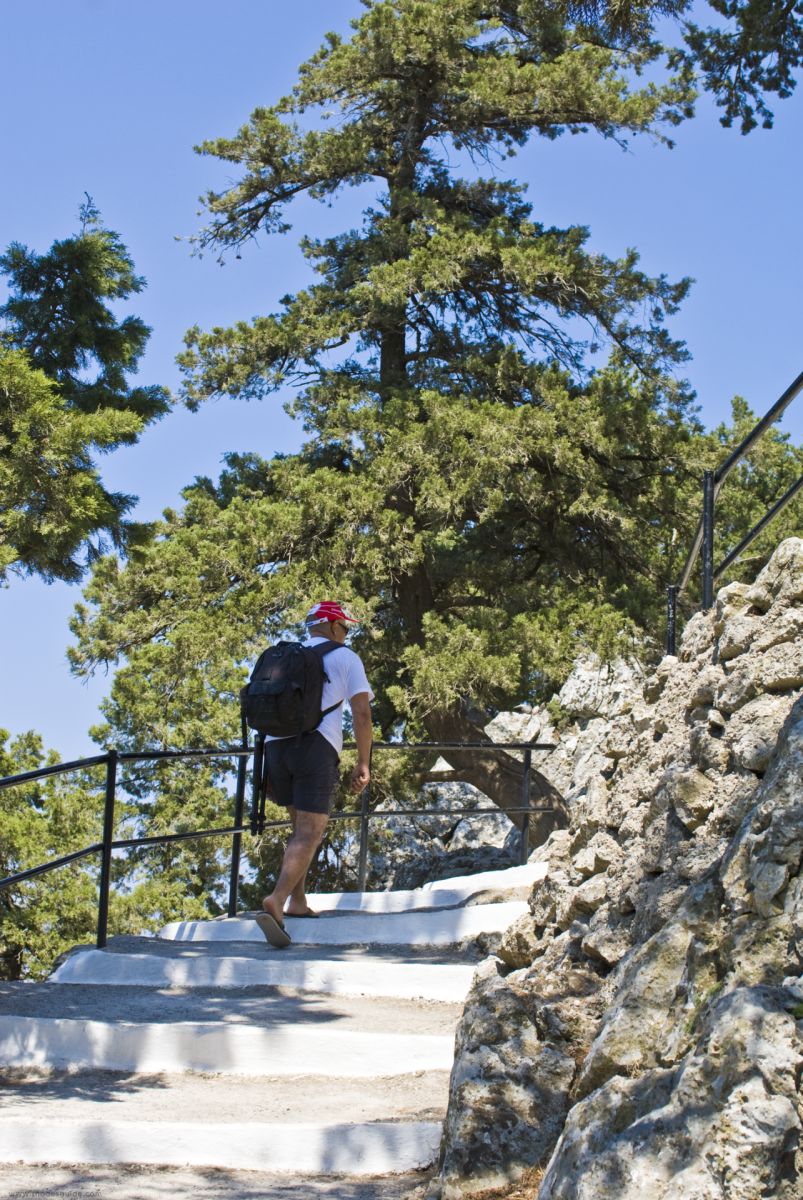
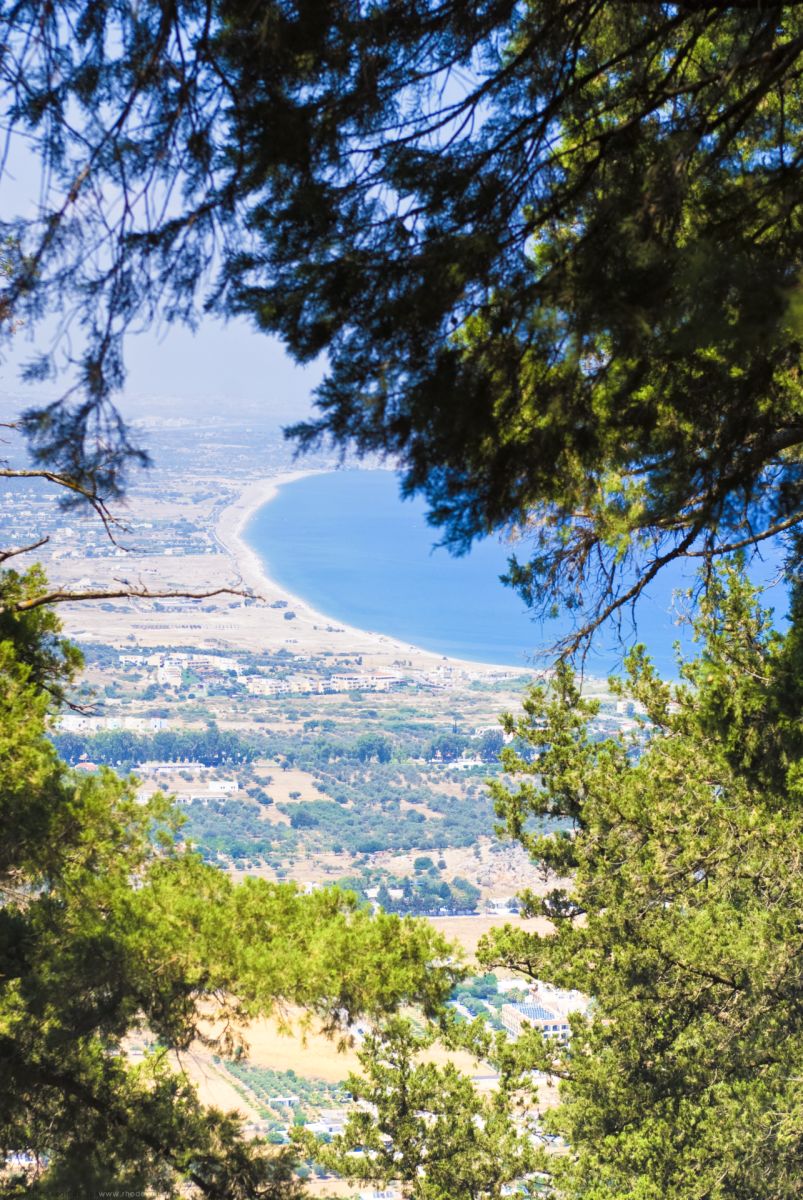
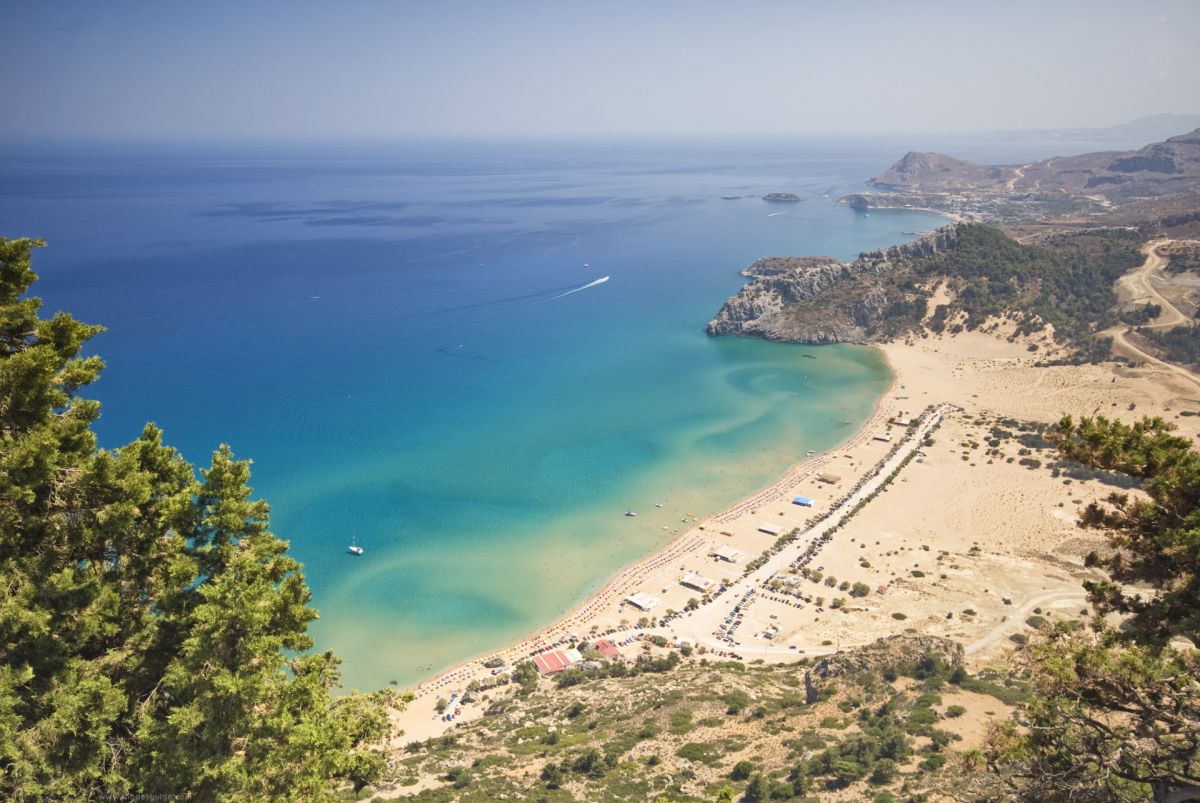
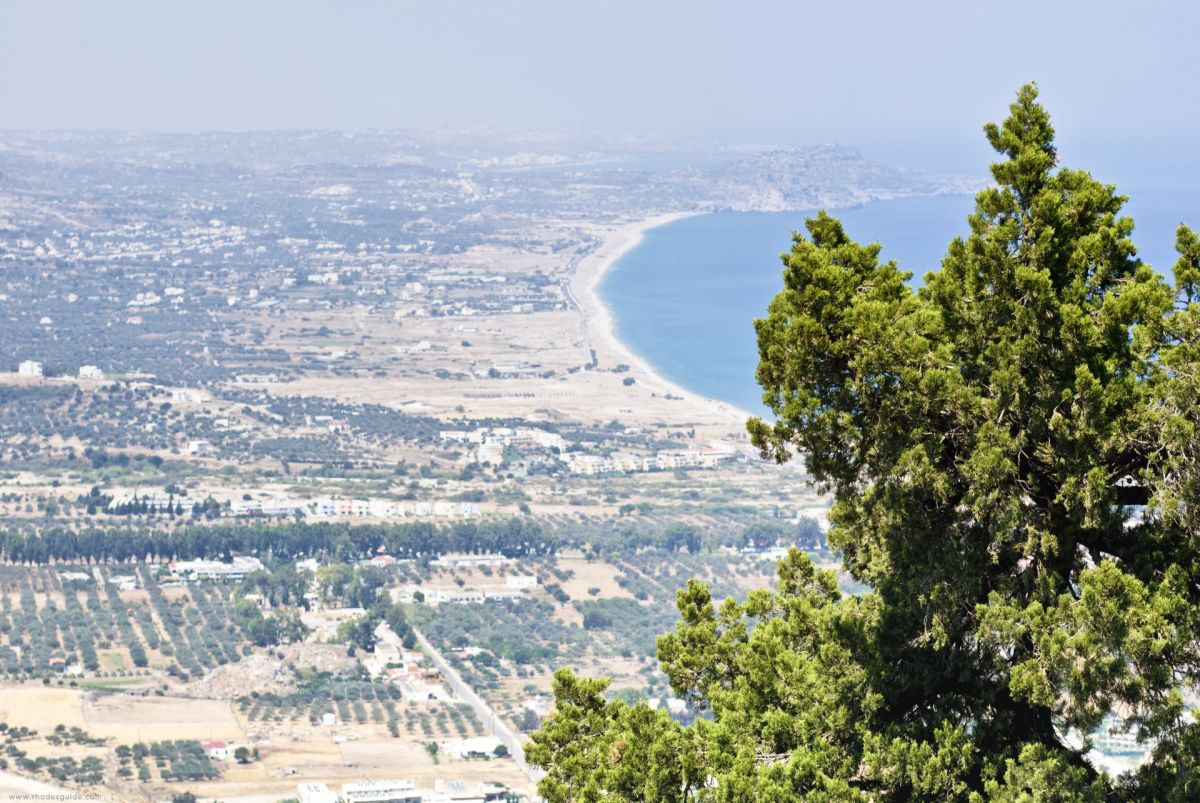
The road to Tsampika monastery turns off the main road, some meters before the turn to Tsambika beach. The road leads half of the way up on the hill. From this point on, you will have to walk up the hill, following the 350 steps. On the top of the hill you will find the tiny, Byzantine church, dedicated to the Virgin. It's perched at an altitude of some 240 m featuring some truly spectacular views on the coast, both north over Kolymbia and south over Tsambika beach and all the way to Lindos, which makes the strenuous effort uphill definitely worth a try!
The legend has it that women facing difficulties in conceiving should climb the hill barefooted to pray to the Virgin for fertility and that most of the times, faith is compensated and wishes fulfilled. If so, the male child to be born to such mother is to be named «Tsampikos» whereas the girl «Tsampika». For those still skeptical on the veracity of this lore, we recommend that you experiment by merely calling the name in a busy street anywhere on the island: just count the number of heads turning to you for cognizance! Tsampikoses and Tsampikas have their name’s day on the 7th of September.
On the western side of the island of Rhodes, approximately five kilometers south east from the village of Theologos (or Tholos), there lies the Valley of the Butterflies - also known as Butterfly Valley (Petaloudes in Greek). This is one of the most attractive destinations on the island.
Topics: Things to do
Read more about Butterfly Valley (Valley of Butterflies, Petaloudes)
Welcome to the enchanting village of Archipolis (also known as Archipoli or Arhipoli), a lively, traditional gem nestled in the heart of Rhodes. Legend has it that the village's first inhabitants settled on the nearby mountain called Axintes. Steeped in history, Archipolis is said to be named after a Cretan prince, Archepolis, who sought refuge in this idyllic haven to recuperate from a grave illness.
Topics: Off the beaten track
Read more about Archipolis
Kattavia is an attractive farming village with a few old houses and a picturesque village square. It is popular with surfers since Kattavia is the village closest to Prasonisi, so it is no wonder that the few rooms available for rent are usually occupied by them.
Topics: Off the beaten track
Read more about Kattavia (Katavia)